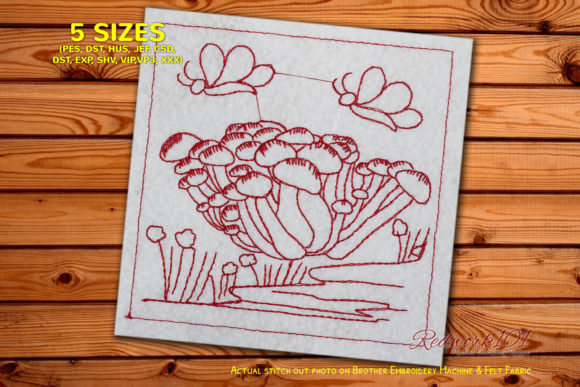
Shimeji Mushroom Embroidery Design Review
As an experienced embroidery designer, I recently tested the Shimeji Mushroom design for use in personalized gift products. This machine embroidery design caught my attention with its charming and whimsical appeal, making it a versatile choice for various handmade items. The Shimeji Mushroom is part of the Food category, but its visual charm transcends that, offering a unique opportunity for creative application in many embroidery projects.
First Impressions: Mood and Charm
The Shimeji Mushroom design brings a sense of warmth and playfulness to any fabric. Its detailed yet delicate structure makes it feel both handmade and elegant. The optional Box Stitch adds an extra layer of texture, giving the design a slightly three-dimensional look. While the color of the outer box can be changed or skipped depending on the design, this flexibility allows for personalization that suits different themes and customer preferences.
This design feels sweet and modern, with an earthy charm that could easily complement seasonal or nature-themed gifts. It has a subtle elegance that would appeal to customers looking for something meaningful yet not overly complex.
Applications for Personalized Gifts
The Shimeji Mushroom is ideal for a wide range of personalized gift products. Here are some of the most promising uses:
- Baby Products: Perfect for baby blankets, pillow covers, or nursery decor. Its gentle and cute appearance would resonate well with new parents looking for a unique and thoughtful gift.
- Wedding Keepsakes: A whimsical touch on embroidered towels, aprons, or custom tote bags could make a memorable wedding gift. The design’s natural theme also fits well with rustic or eco-friendly weddings.
- Family Keepsakes: Ideal for customizing family heirlooms like handkerchiefs, embroidered pillows, or even small kitchen towels that can be passed down through generations.
- Craft Fair and Etsy Listings: As a digital embroidery file, the Shimeji Mushroom offers great potential for small shop products. It can be sold as a downloadable file or used as a printable mockup for custom orders.
Where to Use with Caution
While the Shimeji Mushroom is a beautiful design, there are certain applications where care should be taken:
- Small Lettering: If the design includes text or intricate details, ensure the stitch density is appropriate for the scale of the embroidery.
- Delicate Fabrics: Use proper stabilizer when working with lightweight or stretchy fabrics like baby clothes or sheer materials.
- Dark Fabric: Test thread colors on dark fabric to ensure visibility and contrast. Some colors may not show up well unless adjusted.
- Frequent Washing: For items like towels or aprons that require frequent washing, consider using a durable stabilizer and high-quality thread to maintain the integrity of the embroidery over time.
Giftability and Customer Appeal
The Shimeji Mushroom enhances the perceived value of a finished product by adding a unique and artistic touch. Customers are more likely to view an embroidered item as a handmade product with emotional significance, especially if it's personalized with names or dates.
For Etsy sellers and small business owners, this design can be a valuable addition to their collection. It appeals to buyers who appreciate the artistry of handmade goods and are willing to pay a premium for quality and customization.
When it comes to product photography, the Shimeji Mushroom design can create a soft, inviting aesthetic that encourages buyer engagement. Whether displayed on a pillow cover, towel, or tote bag, the design adds a touch of personality and charm.
Practical Embroidery Notes
Before using the Shimeji Mushroom in real customer orders, here are some practical tips to keep in mind:
- Test on Scrap Fabric: Always test the embroidery on scrap fabric before applying it to your final product. This helps identify any issues with stitch density or color contrast.
- Check Thread Color Contrast: Ensure that the chosen thread colors work well with the fabric you're using. Darker fabrics may require lighter threads for better visibility.
- Confirm Hoop Size: Make sure the hoop size is suitable for the design. If the hoop is too small, it may affect the overall look and precision of the embroidery.
- Review Stitch Density: Adjust the stitch density based on the fabric type and desired outcome. Too dense and the fabric may pucker; too loose and the design may look incomplete.
- Use Proper Stabilizer: Especially important for stretchy or textured fabrics. A good stabilizer will help maintain the shape and detail of the embroidery.
- Compare Light and Dark Fabric Mockups: Always review how the design looks on both light and dark fabrics. This ensures that the final product meets customer expectations regardless of fabric choice.
- Check Small Details After Stitching: Pay close attention to small details after stitching, especially if the design includes intricate elements.
- Confirm Commercial Licensing: If you plan to sell finished products using this design, make sure you have the proper commercial licensing. The Shimeji Mushroom may come with restrictions, so always check the terms before selling.
Final Thoughts
The Shimeji Mushroom is a delightful and versatile machine embroidery design that can elevate a variety of personalized gift products. Whether you're an Etsy seller, handmade product creator, or wedding gift designer, this design offers a unique way to add charm and character to your creations.
With careful planning and attention to detail, the Shimeji Mushroom can become a favorite in your lineup of custom embroidery designs. Just remember to test it thoroughly and consider fabric compatibility before moving forward with real customer orders.